Wednesday, June 10, 2009

Assertiveness vs. aggressiveness in Horticulture

Call out to The Casual Gardener and Yardeners:

Quick note to those who wish to appreciate easy care plants but not create extra work in the landscape.


Please take the time to become familiar with the plants considered possibly invasive in Missouri and don't plant them. When you find them- remove them while they are small and easy to manage.


These are at the least high maintaince plants when you decide enough is enough. Also take care not to use the word "invasive" carelessly as many harmless plants that reseed easly and can be controled with a quick clip are getting confused with some more problematic plants that are moving out of our reach and causing control difficulties by crowding out our natural landscape ( see invasive Honeysuckle picture above)


Most importantly- know what is a problem in your specific area. All adaptive plants are not invasive everywhere and there are friendly plant members in many of these plant families that are best choices for a garden. My favorite honeysuckle is a non-invasive native to the lower Midwest, Lonicera sempervirens- I wouldn't ever have a garden without it!

Hopefully Growing Smarter All The Time,

MaryAnn


P.S. Here are some helpful links to help you know more about this topic!


http://www.cas.vanderbilt.edu/bioimages/pages/invasive-plants.htm

http://www.usna.usda.gov/Gardens/invasives.html

http://www.fleppc.org/FNGA/St.Louis.htm

http://www.invasivespeciesinfo.gov/unitedstates/mo.shtml

http://www.ill-inps.org/

http://www.chicagobotanic.org/research/conservation/invasive/index.php

Trees Invest In Your Future and Theirs with pruning


Invest in the Future: Trees, Knowledge and Timely Management Increases Value!


As you gaze up into your trees this summer, it is possible you will see not only a sky of green, beautiful shapes, song birds, butterflies and perhaps even caterpillars. You might also see limbs without leaves, smaller than normal leaves and areas where the quantity of leaves appears to be less or not evenly distributed.


The typical approach is then to grab a chain saw and start accessing tree limbs for removal.
Halt, wait stop! Not all trees should be managed at the same time or even the same way!
Pruning can be dangerous for you and the tree. The professional assistance of an arborist can save you time and money. There is the potential opportunity for injury for you, the tree and the surrounding property!

Professional Arborists manage trees (and frequently your entire landscape) They are in some ways, your best financial investment expert, since what they do increases your real estate value. When done right, as the tree grows, so does your investment portfolio!


Tree management needs assessment all during the fluctuating cycles (seasons) and reviewed periodically for best management practices for value building for the future.

As a property owner, this is like hiring a financial consultant to review your investment portfolio to look at your overall needs, create a inventory of what your currently have and need and advise you how best to proceed. A consultant considers your existing commitments, your long and short term investments, and your goals. This will help you understand your real estate investment and build value in your property.

Pruning at the proper time can avoid certain disease and physiological problems:
To avoid oak wilt disease DO NOT prune oaks during April, May, or June. If oaks are wounded or must be pruned during these months, apply wound dressing to mask the odor of freshly cut wood so the beetles that spread oak wilt will not be attracted to the trees.
To avoid increased likelihood of stem cankers, prune honey locusts when they are still dormant in late winter. If they must be pruned in summer, avoid rainy or humid weather conditions.

Prune apple trees, including flowering crabapples, mountain ash, hawthorns and shrub cotoneasters in late winter (February-early April). Spring or summer pruning increases chances for infection and spread of the bacterial disease fireblight. Autumn or early winter pruning is more likely to result in drying and die-back at pruning sites.


Some trees have free-flowing sap that “bleeds” after late winter or early spring pruning. Though this bleeding causes little harm, it may still be a source of concern.


Prune the following trees after their leaves are fully expanded in late spring or early summer. Never remove more than 1/4 of the live foliage.

Examples include:
Acers (all maples, including box elder
Butternut and Walnut
Birch and its relatives, ironwood and blue beech.


The time of pruning should take into account the life cycle of insects and diseases. Plants in the genus Prunus (flowering cherry, cherry laurel) are prone to develop bacterial cankers. The spores for the diseases, which are released in fall and early winter, can enter plants through fresh pruning cuts and wounds. Prunus trees do not initiate new cankers during late spring or summer. Dogwood borers are most active in May, June, and July. Thus, dogwoods should not be pruned during these months.

Tuesday, June 9, 2009

The Incredible Edible Landscape Saga Continues


A Few Edible Landscape Suggestions for the Lower Midwest

( for more suggestions visit the main website article section. There is an entire edible landscape recomndation that was part of a presentation for
Red Cedar Country Gardens spring workshops. It was a combined trip as I also shared my excitedment about the many ornamental natives that are front door appropriate. this audiance was the Kansas City Master Naturalists and Kansas City Master Gardeners. It was held at the Anita B. Gorman Discovery Conservation Center. It also included a terrific selection of plant material. Both list have native plant details as well as some cultivar specifics! Click here for main website page / resources for downloading plant lists/handouts!


Malus (Apple). Gold Rush, M. Enterprise and M. Jonafree
Asimina triloba (Am. Pawpaw)
Diospyros virginiana (Persimmon)
Prunus persica 'Bonfire'
Prunus Americana (Wild plum)
Prunus domestica subsp. Insititia (Damson plum)
Vaccinium corymbosum ’Duke’, ‘Bluecrop’ and ‘Elliot’
Aronia melanocarpa (Black chokecherry)
Amelanchier spp. (Serviceberry)
Vitis labrusca (grape) ‘Seedless Concord’ or other disease resistant variety
Actinidia arguta ((hardy kiwi)) ‘Issai’ (self pollinating)
Sambucus canadensis (American Elderberry) see note on cultivar selections!
Ribes odoratum (Clove Currant)
Rubus ‘Thornless Chester’
Fragaria vesca (Woodland strawberry)


Power Vegetable Gardening (Maximum success in small spaces)
Bush beans (for planting after peas) (starts well from seed)Broccoli (plant early from starter plants)Carrots (starts well from seed)Cucumber (bush-type) (use starter plants or seed)Lettuce (starts well from seed or use starter plants for an earlier crop)Onions ‘Walla Walla Sweet White (start with long day variety from "sets")Peas ‘Sugar Bon Early (an early crop) (starts well from seed)Peppers (Capsicum spp) ‘California Wonder’ (plant started plants) (green peppers are easiest)Radish (Raphanus sativus ) ‘Burpee’s White, ‘Cherry Belle’, ‘Easter Egg’ (plant seeds early)Spinach (Spinacia oleracea) ‘Tyee’ / ‘Olympia’ bolt resistant (plant seeds early)Tomatoes (Solanum lycopersicum) ‘Gardener’s Delight’ / ‘Better Boy’, Okra 'Red Burgundy' (pictured above)

Monday, May 25, 2009

KTRS 550 Inside Out Show Featured Plant Cladrastis kentukea


Cladrastis kentukea / American Yellowwood-Come Rain or Come Shine!


Yellowwood is a summer flowering medium size tree (30-50’ in ideal conditions) that likes clay soil. Excellent as a low-maintenance, small shade tree for residential lawns, particularly on smaller properties, it is especially appropriate near patios and terraces or grouped together on larger properties so the fragrance can be appreciated!

It is great for “green space” uses, wildlife habitat, projects that require low or minimum water usage, soil erosion issues and conservation projects such as rain gardens and storm water run off areas. Once established, this beautiful native tree is tolerant of variable weather conditions including brief wet periods in spring and early summer and frequent dry periods common during the summer season. It has a good water "take up" ability as its water need pattern corresponds well with the seasonal moisture excesses and shortages.

An alternative for the ash tree (Fraxinus pennsylvanica), this member of the pea family (legumes) is a “nitrogen fixer” that is sometimes said to have an “ash tree look”. It does have the yellow fall color, the same basic rounded shape/ form and a similar pinnately compound leaf pattern. Most importantly, it is without emerald ash borer problems or any other major insect and disease problems!

When shopping for this addition to the landscape, a big tree isn’t necessary! Instead look for a young tree that has at least a few clusters of the sweetly fragrant "wisteria like" flowers or the developing seed pods, indicating it is mature enough to produce flowers. Trees are relatively fast growing and the easiest to transplant when young. Growth slows naturally with maturity. Trees with the evidence of buds, flowers or seed pods are usually already more than 8 years old!

Although the flowers are typically white, new selections are now being introduced with a soft pink coloration to the petals. Like many flowering and fruiting trees, the most profuse blooming occurs in alternating years. Thin, beige- brown seed pods are present primarily in September-October. They are not usually considered a messy problems as they are not a significant contributor to fall clean up.

Both Cladrastis lutea and Cladrastis kentuckea are synonymous for this American beauty. The common name “yellowwood” refers to the distinctively color of the heartwood. This Missouri native naturally occurs in several southwestern counties near the White River and its tributaries. This tree is under planting tolerant of perennials and small shrubs, preferably at installation to avoid tree root damage.

Pruning is seldom needed, however if any trimming is done, wait till summer, after the flowering period has ended. It will bleed heavily if pruned in the winter or spring. The bark is beautiful and beech like, deserving focal point staging. Increase appreciation for true stuctural beauty by extending interest with the new solar uplightng for late evening enjoyment. this is a lovely native addition to the residential, commercial or municipal landscape.

Thursday, May 7, 2009

550 KTRS Inside Out Show


550 KTRS Inside Out Show

Power Gardening Grows!


Jim's Top Power Garden Crops:

Bush beans (for planting after peas) (starts well from seed)

Broccoli (plant early from starter plants)

Carrots (starts well from seed)

Cucumber (bush-type) (use starter plants or seed)

Lettuce (starts well from seed or use starter plants for an earlier crop)

Onions (start from "sets")

Peas (an early crop) (starts well from seed)

Peppers (plant started plants) (green peppers are easiest)

Radish (plant seeds early)Spinach (plant seeds early)

Tomatoes (starts well from seed, but you'll get a head start by planting already started plants)


Jim's Top 10 Dos and Don'ts When Growing a Garden:

1. Location: Do locate your garden in a sunny spot.

2. Don't plan an area too large to take care of. Little Time?... Little Garden! 12' x 12' is just fine.

3. Unless you have a large space, Don't try to grow "space hogs" like pumpkins, watermelon, most cucumbers, or corn.

4. Do try to pick crops you can rotate, so something is always "happening" in your garden.

5. Do plan to grow veggies you like. You're more likely to pay attention to those crops.

6. Do plan to use some "elbow grease" for adding organic matter, pulling weeks, watering, planting, and harvesting.

7. Do try to plant more of the crops you use the most. ex: potatoes, lettuce, onions, and tomatoes.

8. Do involve your kids or grandkids. They love to watch stuff grow... and they'll learn and remember.

9. Do allow for fall planting, too. This is not just a spring thing.

10. If a crop (or the whole garden) doesn't respond the way it should, Don't be discouraged. Sometimes that's the way we learn.

Jim's Top Tools:
Long-handled (not bending) Spade
Stiff garden rake
Hand trowel (narrow blade)
Garden glovesHoe (narrow blade or "V" point)Garden hose

Now you're on your way to your own very tasty power garden!
Visit http://www.rollingridgenursery.com/powergardening.html for updates as the season continues!

Saturday, April 25, 2009

KTRS Inside Out Saturday Show features Rain Garden Plants plus more blog information to be posted soon Visit these rain gardening websites


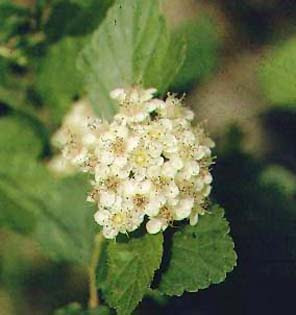
KTRS Featured plant today is Ninebark ( The City of Chesterfield's gift plant today distributed to attending residents today celebrating Earth Day and Tree City recognition.) This is an easy to grow flowering and song bird favorite. It likes a wide variety of soil and moisture conditions as well as sun or shade. Perfect feature for rain gardens! Visit this website for habitat details. Easy care! http://biology.missouristate.edu/Herbarium/Plants%20of%20the%20Interior%20Highlands/Plants_of_the_Interior_Highlands_P.htm
Rain Gardening Websites

http://www.showmeraingardens.com/ Website focused on managing storm water, conserving water resources and improving water quality.

http://www.shawnature.org/ Homeowner focused rain gardening and storm water runoff workshop program Thursday, June 11th, 2009. visit link for details and registration information.

http://www.raingardens.org/ “Green Dreaming”, site is under construction, but has some nice thoughts and well worded commentary. Originates in Western Michigan so plant recommendations are not appropriate for Iowa.

http://clean-water.uwex.edu/pubs/pdf/home.gardens.pdf Brochure available as a PDF file. Nice diagrams, demo pictures. From Univ. WI Extension office.

http://www.co.dane.wi.us/commissions/lakes/raingarden.shtml Another excellent Wisconsin reference. Great explanations, step by step “how to” available as a PDF: http://www.co.dane.wi.us/commissions/lakes/pdf/HowToBuildaGarden.pdf

http://www.extension.umn.edu/yardandgarden/YGLNews/YGLN-May0101.html#rain short but fairly comprehensive explanation of rain garden concepts, nice diagrams. From MN extension office.

http://www.mninter.net/~stack/rain/ Twin cities area garden site, nice explanations, diagrams. Many links to other rain garden sites. Printable PDF pamphlet about rain gardening.

http://chicagowildernessmag.org/issues/spring2001/raingardens.html
Well written article about rain gardens in the Grayslake area of Chicago.

http://www.nwf.org/backyardwildlifehabitat/marsh.cfm
National Wildlife Federation article about rain gardening, entertaining, some instructions, plants listed not appropriate for Iowa.

http://www.appliedeco.com/StormWaterMgt.cfm
Taylor Creek Restoration Nurseries, Applied Ecological Services, Inc. website. Extensive information about native landscaping and green development.

Thursday, April 2, 2009

Spring arrivals Bloodroot


Bloodroot

Bloodroot is a spring blooming Missouri native wildflower blooming now in rich woods and along streams throughout the State. Only 6-10" tall, it spreads over time into a significant woodland carpet that rolls out as the season begins and fades away as summer arrives.
The curled scalloped leaves push out from under the dried leaves and then relax their sleepy hold releasing sweet simple flowers from their grip. Celebrating their escape from foliaged fingertips, the flowers dance above the leaves briefly (1-2 days) before slipping quietly away without a sound!