Sunday, February 20, 2011

KTRS 550 Inside Out Show Plant (s) of the Week Saturday February 19th 2011


Think Summer? (BULBS)

Well I know everyone is in a rush for Spring- but hold on-early springs have their own set of issues including the effect they have on the summer garden. One of the easiest quick fixes is to plan for having “extra inventory” such as summer bulbs, on hand growing in attractive pots. This gives you the pleasure of “growing on” some of your own favorites which should include a few of these novelty bulbs.

These "summer bulbs" include mostly not winter hardy but fast growing tropicals with bulb-like root structures. Some you may be familiar with as plants but perhaps you have never thought of them as bulb purchases.

To name just a few that are frequently listed: begonias, caladium, cannas, dahlias, gladiola, gloriosa lilies, elephant ears,and sometimes even liatris (although it is perfectly winter hardy for us). These end up listed in summer bulb catalogs, hense they end up grouped together under the term “Summer Bulbs”.

A few well chosen summer bulb combinations mixed with some summer show stopping annuals can play a leading role in carrying on color after the spring rush and during the lulls that can happen when Spring pushes everything along fast. Order now, start these in individual pots and then replant them combined with a few good annuals when warm air is the norm and keep them on your deck or patio where they can be enjoyed and still be promoted to stardom in the summer garden when openings finally do occur.

Because most summer bulbs grow slow till the heat kicks in, pot them with a few appropriately selected annuals. Use at least moderate size pots- and wait! Remember, keep the pots situated for easy access and viewing- once they start growing, the fun begins!

When the gaps open out in the garden (and they will) transport one of your “pot beautiful” successes to the vacant area and either situate the already growing potted container in the clearing or dig a hole and drop the whole combination planting into the ground!

Many are Missouri Botanical Garden favorites. These may also arrive as growing plants at your local garden center/ nursery. Take this short cut if it is offered as some summer bulbs can be challenging. Early watering and temperature requirements can be specific.

Here is a link and go ahead- think Summer-it will be here right on the heels of Spring!

www.bulb.com. And http://www.flower-garden-bulbs.com/summerflowerbulbs.html#ixzz1EcxcPvcY

pictured Canna 'Striata' / Mobot

Monday, February 14, 2011

KTRS 550 Inside Out Show Plant of the Week Saturday February 12th 2011


Potted Bulbs


by MaryAnn Fink

Conservation Specialist

copyright 2011


This is the time of years many gardeners, anxious for spring, purchase green house forced potted bulbs for their homes, offices and as gifts.


FYI although some are more familiar than others, the most popular bulbs used are tulip, hyacinth, narcissus (daffodil), grape hyacinth, iris and crocus.

For your maximum enjoyment, purchased these beauties just after their buds are evident but are still closed tight. Don’t wait till they are fully opened! I agree it is hard to tell what color you are purchasing, but better to be surprised for a while than surprised the fun is over so soon!

Here are a few tips on how to take care of your new plant:


1) Place the pot in a cool spot where temperatures at night are about 60 degrees Fahrenheit.
Do not place it a sunny location, the warm temperatures in sunshine will speed flower development and shorten the life of the flowers!

2) Remove the foil wrapper if there is one to avoid standing water. Keep the plants slightly moist but do not fertilize!

3) Do not try to keep them growing indoors for another cycle of flowers. A few bulbs are garden worthy for a few more seasons if planted in the garden – particularly daffodils!
4) Tulips do not do well after forcing! Also discard any bulbs that have been forced in water such as hyacinths or paperwhite narcissus.

5) When the bulbs have finished flowering indoors, remove the flower stem so no energy is wasted trying to produce seed.
6) Move the plant to a sunny location and keep them wet enough so that leaves are able to mature and dry gradually. If spring arrives before the natural ripening process is finished- plant them as they are “in the green”- this is while the foliage is still intact and growing! This is easy and the way I have had the most success.
7) If this is not possible, allow the tops to die away naturally, remove the dry foliage and soil from around the bulbs and store them in a dry place until fall. Plant them outdoors in the garden in the fall when it is the right time for your area.
8) If you have determined disposal is your only option-remember the soil, roots and foliage can be added to your compost pile!


Sunday, February 6, 2011

KTRS Inside Out Show Saturday February 5 2011


Bonus Time -Second week in a row Co-Hosting with John-so much fun!


Did everyone else already know the darker colored the granite the heavier it is AND more expensive?


It seems very do-able with Affordable Kitchen and Bath's special pricing and deals- and sooo pretty!


I miss you Jim, I do, even if it is hard for listeners to tell!


I was greeted with such a warm welcome-I thought Spring had arrived!


Before the show I was pleased to see Mary Collier's bright smile as we shared our favorite topics-our children- and nature. We both are enjoying changes in our family status - her baby girl just got engaged and my son announced his engagement on Christmas!


During the show we had a busy but good time on air with lots of calls and great experts on hand to answer appliance and remodling questions (oh oo another job list- good thing there is a winter to do all this!)


We did talk answer some plant questions but it was clear- kitchens and baths were the focus for our listeners. I never fail to learn something in our time together- I hope the same is true for our listeners!


Our plant of the week was Amsonia hubrechii - here is a quick link to learn more:


Saturday, January 29, 2011

KTRS Inside Out Show Saturday January 29th 2011


Hostess with the Mostess-Fun

This may be bad English but it is what comes to mind when I think about the great fun at Schnarrs Hardware store with John and Frank this Saturday.

Particularly enjoyed that Dave was sharp and quick with John’s humor- a gift I lack but had me laughing and really enjoying all three hours of our on air time- so much that we never got to our plant of the week! SORRY!

This was my first time to this location and I was truly as impressed with their polite and friendly staff as I was with their assortment of “gee I need this” items on the shelves and hanging.

I also appreciated Frank’s knowledge on every topic we discussed- I went home with a job list –and new friends1

Saturday, January 22, 2011

KTRS 550 Inside Out Show Plant of the Week January 22 2011


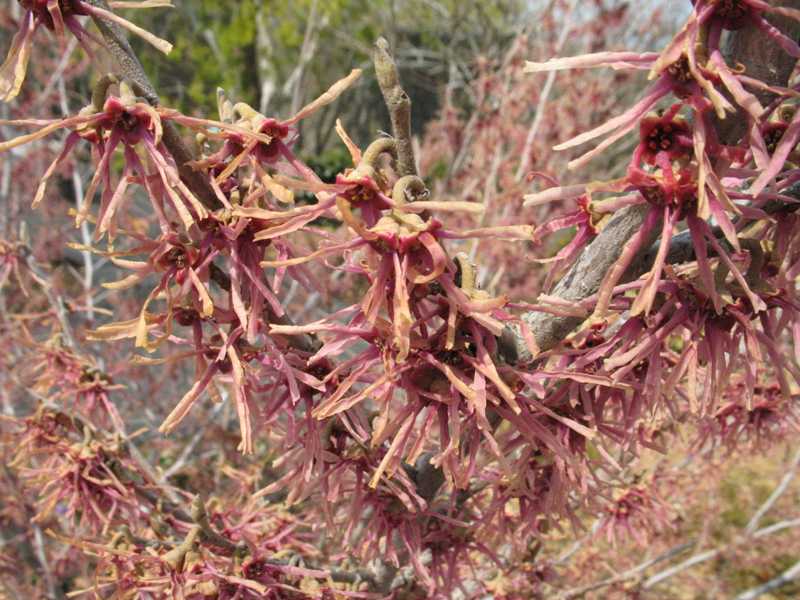
Ozark Witchhazel : A Magic Moment Maker


by MaryAnn Fink

Conservation Specialist


copyright 2011


This unlikely flowering period is NOT a trick but rather a great winter blooming option!

Sometimes hard to find but easy to appreciate, perhaps the real trick is placement.
Be sure to locate her in the landscape where you can appreciate her sweet confetti like flowers, despite the snow and January’s miserable cold! (It seems I have lost my winter hardiness- cold hurts!)

Although this native shrub does not rely on any secret potion to burst into bloom in the drabbest time of the year, (she does it naturally!), selecting between a cultivar or the straight species for me would be the only “whichy” part!

My best recommendation is to go right now while the sun is shinning and the cold feels almost tolerable to the Missouri Botanical Garden and see for yourself “which” one fits your needs.

Now that there is finally some awareness of this shrub’s durability there is a “ growing interest “ for breeders to work with this species. New hybrid crosses and some selections have brought interesting color variations, even one with somewhat purple foliage.

There is also some bragging rights about flower size and fall color variations. ( so I guess I should recommend another trip in fall if this is important!) Recently a weeping form made it to market. Be sure to take a note pad, pen, map of the Garden and a camera!

There does appear to be some difference in leaf drop as well. Some witch hazels do a better job of showcasing their flowers against clean bare stems but a few have leaves that linger. This makes it difficult to really appreciate the rather small but fun strappy flowers.

If fragrance is an important to you, know that Hamamelis vernalis can have a wonder sweet lemon scent that drifts and hovers in the vicinity of the flowers. I found it easiest to appreciate the delightful fragrance from a short distance in fairly still air. It was nearly impossible to detect with my nose buried in the bush!

Care Factor Rating: 1-2 depending on which form is selected. Ozark witch hazel must be watered regularly till she is established. A moderately slow grower, she maintains her natural branching habit with minimal pruning. Removal of the occasional damaged or dead branch can be done any time of the year.

Because of her look in a natural setting, it might be tempting to want to prune her to encourage a denser branching habit. This seems especially true if in her youth if she appears to be slightly willowy or thinly branched. Use caution, only a light hand is recommended because she is slow growing and usually will develop a naturally dense habit with age if not overcrowded or environmentally challenged.

If over time suckers begin to develop at her base / ground level, consider the space allowance and remove only what is necessary to maintain a visual balance for the space. She is very long lived when well placed and can eventually create a stunning colony if given enough time to mature.

Flowers develop on the old growth so consider only a gently pruning if any soon after flowering to modify her shape. This is best done in the early spring after flowering and before any new growth appears. Usually a conservative approach is recommended.

She is rather newly introduced for use in cultivated space use so placement, applications and pruning management recommendations may differ depending on landscape styles and spaces. At this time there has some creative formative pruning resulting in some espalier forms which will require slightly more pruning management!

All pruning should be delayed till she is past any transplant shock. At that point she may have filled out naturally and not require any pruning. Also remember flowering is likely to be affected with any pruning management approach. As with any shrub, never remove more than 1/3 of the total growth.

Monday, January 17, 2011

KTRS Inside Out Show Plant of the Week January 15 2011


Amsonia hubrichtii


by MaryAnn Fink

Conservation Specialist


copyright 2011


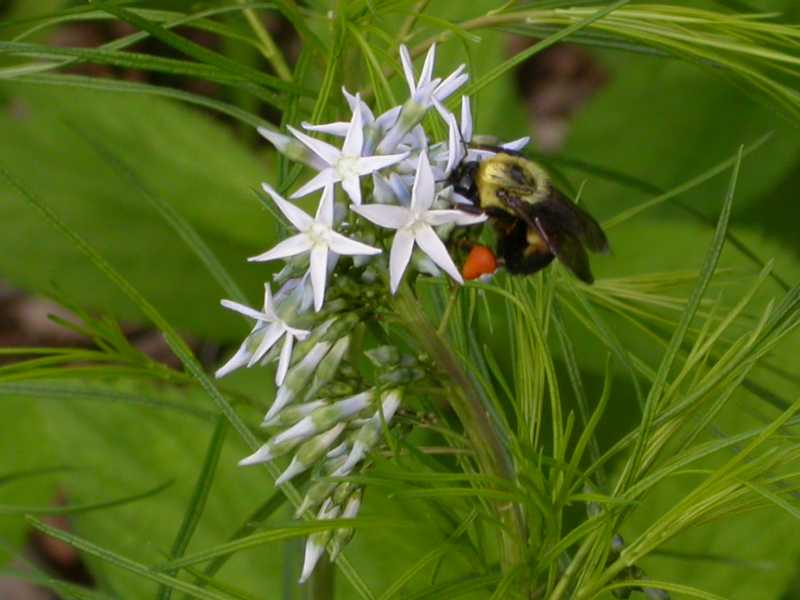
This American native best known as Arkansas Bluestar opened the door for me to this genus, eventually introducing me to rest of this great family of plants that are “doorstep worthy”.

She is a perfect example of an easy beautiful plant for average conditions! With her thread thin soft as silk clean green foliage, she has stood the test of time on my personal “go to” list of work friendly plants for fine texture.

Although she looks delicate, she stands up well to full sun, hot-cold, wet-dry, and humidity without bowing. She is so soft looking that a mature specimen can single handedly creates the relief I need from the monotony of “moderate textured medium green” that monopolizes so many uninspired landscape.

If it is not enough that she looks great from a distance, she also delights my close up viewing urges with a “go ahead you can touch me” invitation that she reissues each year.

By late spring, Amsonia h. completes her misty emerald cloud illusion by adding a bridal veil of “sunrise sky blue” stars that appear to be floating atop her fern-like foliage.

The delicate looking blossoms will eventually fade away, leaving clusters of dangling seed pods that age to cinnamon beige. These can be quickly tip sheered away leaving a fresh tidy appearance to this billowy space holder till fall arrives.

As the cool air strokes her foliage tresses, this multi-season beauty transforms again, now a tousled mass of gold that shines in the sun. Eventually the foliage will age to soft toasted maize and the stems become bare and bent.

In a harsh winter, burdened with snow, her once flexible form typically collapses into a wiry maze. Even in her sleep she works to protect the ground from exposure and erosion till spring calls her name and it all starts again!

Care Factor Rating: 2 During spring clean-up cut back all the old stemage from the previous year and then cut around the crown and through the roots like you are cutting a cake away from its pan. Remove any roots or crown portions that have stretched beyond the designated space for this plant and refill with soil.

To keep her fresh looking, all season, sheer off the top 4-6” of the stem tips. Do this after she flowers! This will remove the faded flowers, redirect energy from seed production to root establishment. Also this encourages upright growth and leaves a nice foliage mound for the rest of the season. It eliminates the normal tip collapse that happens naturally with her seed formation which leaves Amsonia h. with a less attractive “toasted on top” effect.

Saturday, January 8, 2011

550 KTRS Inside Out Show Plant of the Week Spotlight Saturday January 8th 2011


Happy New Year To All!

Spring Fever Is Contagious!

First Symptoms may include excessive mail checking and random reading in unlikely locations. Also scattered thought/ conversa
tion patterns including excessive blog ramblings have been noted!

This is typically preceding and /or following the arrival of 2011 plant catalogs. Duration / cycle can be as short as 2-3 weeks or a chronic condition can develop. Many industry professionals have had this condition for 5 years or longer with permenent side effects evident when two or more infected persons are allowed to gather.

It is not fatal but can become somewhat debilitating to support relationships. This is due to exhaustive componenet of optomistic attitude and unpredicatable drainage of finances. It is often associated with excessive communication anxiety!

Warning all forms of communication can cause any of the symptoms to escalate! (this includes the many electric forms now available such as any laptop with internet access, mobile phones with smart capabilities / downloadable apps. Any and All communications methods are considered possible "spring fever" carriers!

Extreme "blog rambling" example:

New Spotlight Candidates For KTRS Listeners in 2011:


Read more: http://www.colorchoiceplants.com/#ixzz1ATJ5SdAi

Coming soon!

MISS MOLLY Buddleia X ‘Miss Molly' ppaf, cbraf Good Golly Miss Molly! If you think Miss Ruby has awesome flower color - this plant pushes the color spectrum even further with blooms boasting rich hues of dark Sangria-red. Read more: http://www.colorchoiceplants.com/#ixzz1ATJCgDfG

DOUBLE TAKE™ Scarlet Storm Chaenomeles ppaf, cbraf Dark scarlet red camellia-like blooms with a bright yellow center. Flowers in early spring with occasional repeat blooms. Thornless. Read more: http://www.colorchoiceplants.com/#ixzz1ATJUYpQF

SUGARTINA™ Crystalina Clethra alnifolia ’Crystalina’ patent 21,561 cbraf An improved dwarf selection developed by NC State with attractive glossy, dark green leaves and an abundance of fragrant flowers. NATIVE: North America. Read more: http://www.colorchoiceplants.com/#ixzz1ATJavEU8

LITTLE LIME™ Hydrangea paniculata ‘Jane’ ppaf, cbraf A new dwarf form of the ever popular ‘Limelight’ Hydrangea. Little Lime Hydrangea sports the same great flowers and coloration as Limelight but at one third the size you can fit it in any spot in your garden. It blooms regardless of climate, soil, pH or pruning. Read more: http://www.colorchoiceplants.com/#ixzz1ATJoxwKp


QUICK FIRE™ Hydrangea paniculata ‘Bulk’, patent #16,812 cbraf A breakthrough plant that blooms more than a month earlier than other varieties. It turns to a rich deep pink before ‘Pink Diamond’ even begins to show flowers. It blooms regardless of climate, soil, pH or pruning. AWARDS: SNA Blue Ribbon - Best New Plant Read more: http://www.colorchoiceplants.com/#ixzz1ATJwss2H

SUNNY BOULEVARD™ Hypericum k. ‘Deppe’, patent #20,045, cbraf This tightly branched shrub is noted for its long bloom time, beginning in July and continuing until September. The flowers are a rich yellow and numerous. Read more: http://www.colorchoiceplants.com/#ixzz1ATK4Zgkz
by MaryAnn Fink
Conservation Specialist
copyright 2011